
“Level 2” and “DC fast” are not two brands of the same thing. One is AC, the current that comes out of a wall; the other is DC, the current a battery stores. The difference explains why one is measured in hours and the other in minutes — and why the useful question is not “which is faster” but “how long is my car going to sit there”. Set the two numbers below.
- Level 2
- 3,808
- DC fast
- 749
- 150 kW+
- 221
- Median price
- $0.35
Stop planner · miles against minutes
Will your stop cover it?
120 mi · 1 hour
1 · Miles you need to add
2 · Time you can stay parked
120 miles is about 34.3 kWh at 3.5 miles per kWh. A bigger battery does not add miles faster — it only moves where the stop lands.
Level 2 would still be charging when you left. A DC post does it inside your window.
On a 150 kW post the same energy takes 20 min. Level 2 needs 4 h 46 min, which is 3 h 46 min past your window.
Level 2 · 7.2 kW
needs 4 h 46 min
This fill ≈ $12.00 at the median $0.35/kWh
DC fast · 150 kW post
20 min
This fill ≈ $16.80 at the median $0.49/kWh
Bars are drawn against your 1 hour window. The DC figure counts the post at 105 kW — a 150 kW rating is a ceiling, and a session tapers above roughly 80%.
Prices are the median per-kWh tariff the connectors list in this directory, and they exclude session, parking and idle fees. Home electricity is usually cheaper than any public post.
What is the difference between Level 2 and DC fast charging?
Level 2 feeds the car's onboard charger, which converts AC to DC. That converter is the bottleneck: it is why a 19.2 kW post cannot charge a car that accepts 7.2 kW, and why Level 2 tops out around 19 kW. DC fast skips that converter and talks to the battery directly, so the station can deliver ten or twenty times the power — subject to the car's own DC limit and the pack's temperature.
| Level | Current | Typical power | Miles per hour | Stations in directory | Best for |
|---|---|---|---|---|---|
| Level 1 | AC | 1.4 kW | 4–6 | — | A wall outlet; a top-up, not a plan |
| Level 2 | AC | 6.6–19.2 kW | 20–60 | 3,808 | Home, work, hotel, shopping |
| DC fast | DC | 50–149 kW | 150–400 (peak) | 528 | A top-up on a route |
| DC fast, 150 kW+ | DC | 150–350 kW | 450–1,000 (peak) | 221 | A road-trip stop |
Miles assume 3.5 miles per kWh and are peak figures. A station can carry more than one connector; the speed bands count stations by their reported peak power.
How long does 100 miles take?
One hundred miles is about 28.6 kWh at 3.5 miles per kWh — a fill, not a splash. Drawn against a single day, the difference between the three levels is the whole argument.
Wall outlet · 1.4 kW · Level 1
20 h 24 min
Level 2 post · 7.2 kW · AC
3 h 58 min
DC fast · 150 kW post, counted at 105 kW
16 min
The comparison is also unfair in Level 2's favour, in a way the bars cannot show: the hours at home overlap with sleeping. The charging-time guide takes the same arithmetic apart by car and state of charge.
Which plug belongs to which level
The connector does most of the telling at a public site, with one exception worth knowing.
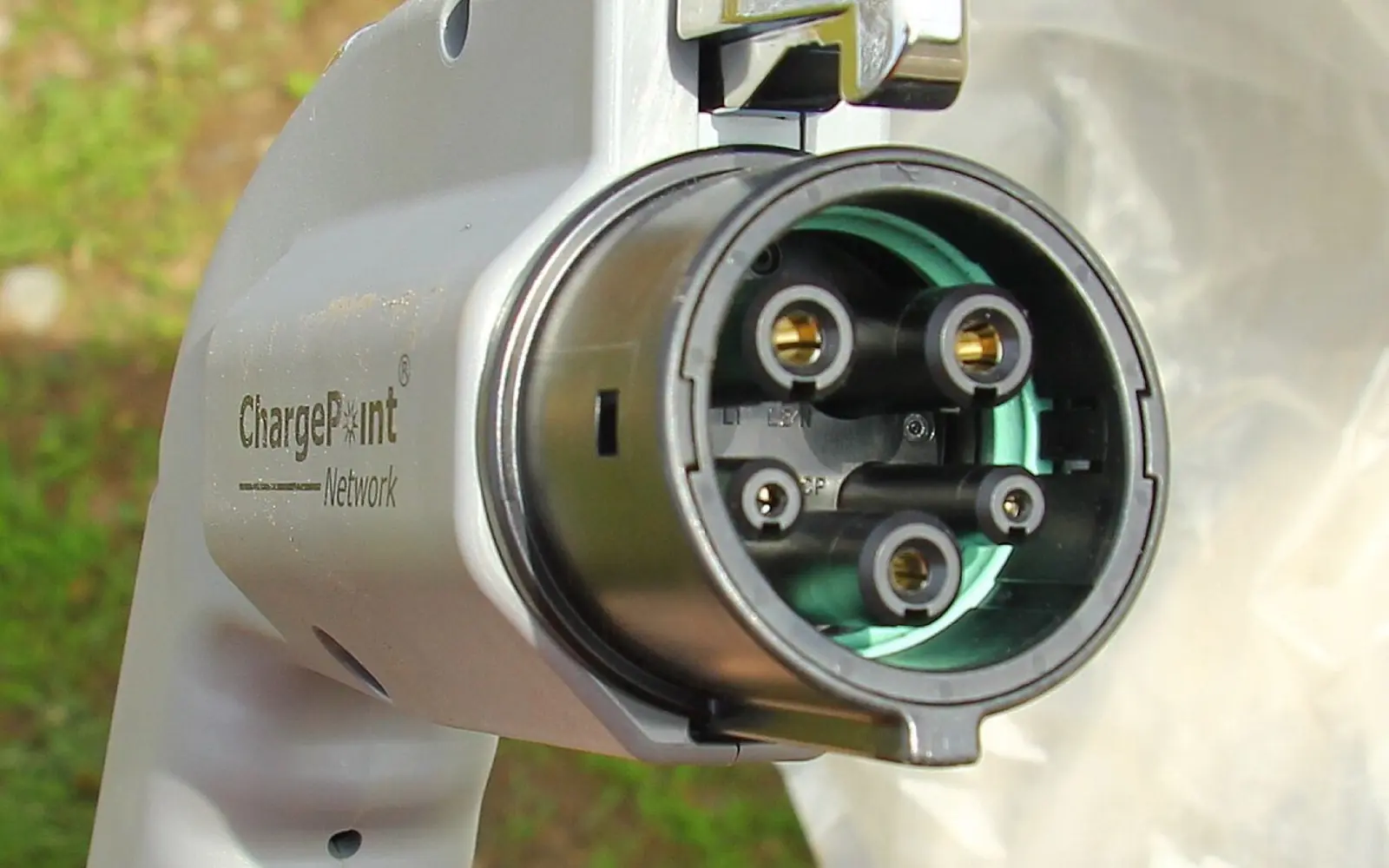
Level 2 · AC
J1772 · SAE J1772
The AC plug on 5,294 stations in the directory, and the top half of a CCS1 inlet.
Every J1772 station →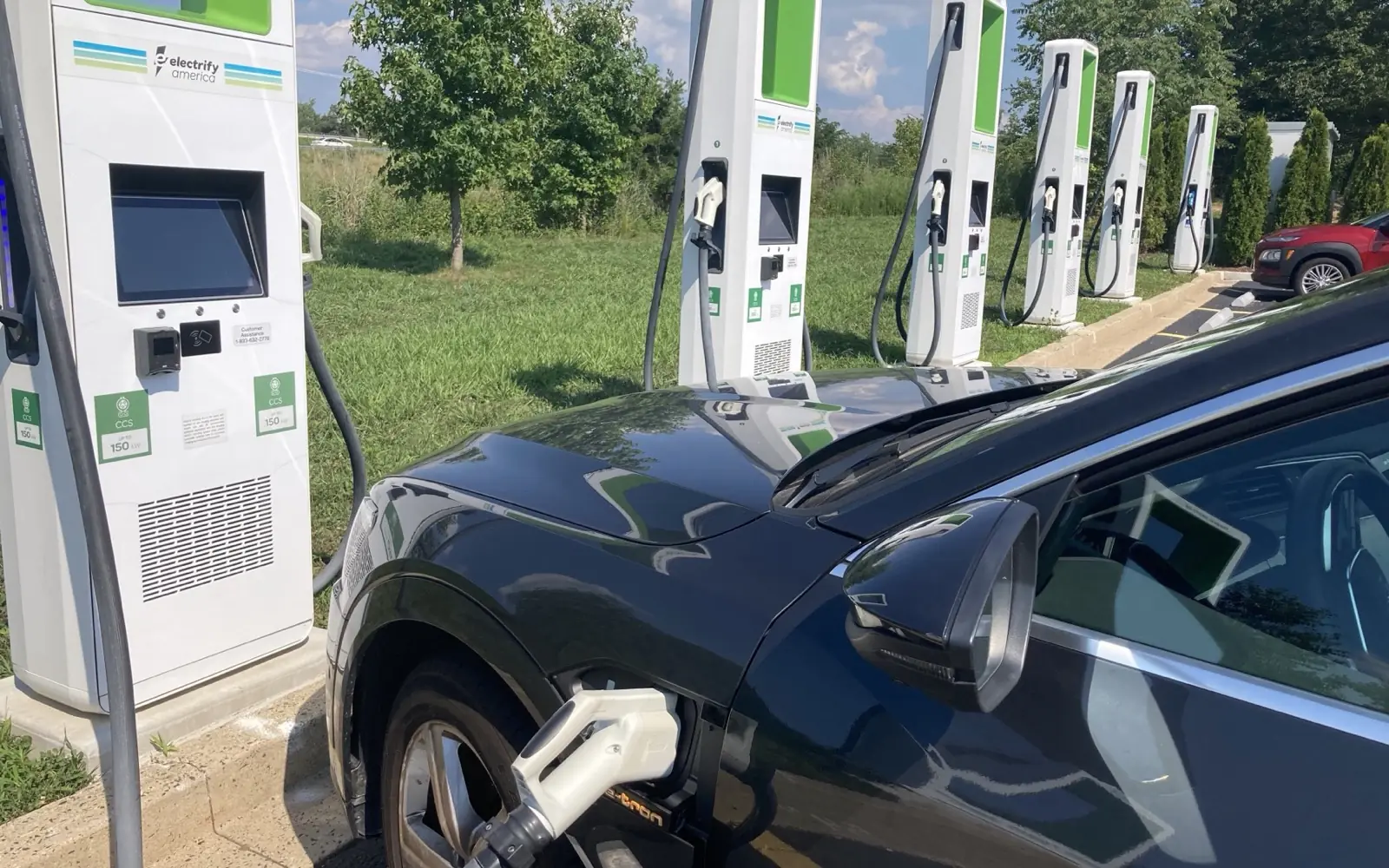
DC fast
CCS1 · SAE J1772 CCS Combo 1
The DC plug on non-Tesla fast sites. All 930 CCS1 stations here are 50 kW or more.
Every CCS1 station →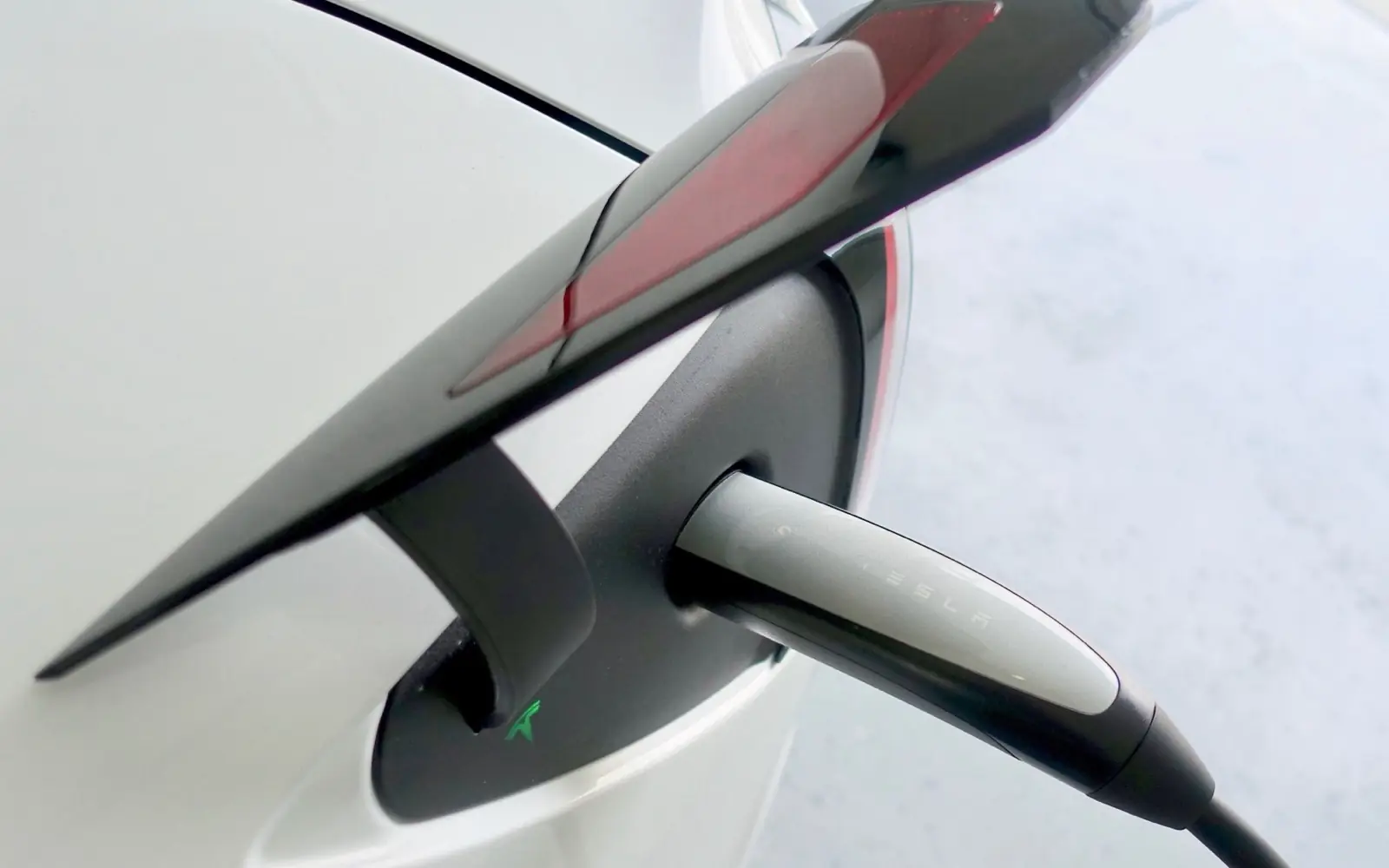
Both levels
NACS · SAE J3400
Tesla's plug is at both: a Destination charger or Wall Connector is AC Level 2, a Supercharger is DC. The plug never tells you which.
Every NACS station →Photos: J1772 — Michael Hicks (mulad), CC BY 2.0 · CCS1 — Ken Fields, CC BY-SA 2.0 · NACS — Steve Jurvetson, CC BY 2.0.
Why DC is not simply ten times faster
A DC charger bypasses the car's onboard AC charger and feeds the battery directly, which is why it can deliver hundreds of kilowatts. But the battery still controls the rate. Above roughly 80% the car tapers, and a site sharing power between two cars splits what it has. The headline number on the charger is a ceiling, not an average — which is why the planner above counts a 150 kW post at 105 kW.
What each one costs
The directory's median listed tariff is $0.35 per kWh. The split by connector is more useful than the average: the median at a J1772 post is $0.35 per kWh, against $0.49 per kWh at a CCS1 post. A Level 2 stop is usually the cheaper kilowatt, before the difference in how long you stand there.
Public DC sites tend to sit above home electricity, and some networks bill per minute, per session or with an idle fee on top. A Level 2 charger at home uses your own rate, which is usually the cheapest way to drive. The cost tables show the state medians, and the cost-per-mile guide turns any price into a number you can compare with petrol.
What it means for the battery
Level 2 is the ordinary way to charge: slow enough to be gentle, fast enough to fill overnight. DC fast is for the trips that need it. The common 80% rule is a road-trip habit, not a rule that a fast charger damages the car. Heat and very high states of charge matter more than the connector itself, and the car's thermal management does the rest.
Which should you use?
- Parked for an hour or more: Level 2. A hotel, workplace or shopping stop is the right shape for it.
- Stopping for minutes on a route: DC fast. Use the 10–80% window and move on.
- Charging at home: Level 2, sized to the car's onboard charger and the electrical service, not to the fastest possible number.
- No charging where you park: A public Level 2 site near home or work can cover a daily commute, even if it is slower than a fast charger.
The rule under all four
Read the dwell time, not the nameplate. If the car will sit for hours, the post's power barely matters; if you are standing next to it, only DC fast makes sense.
Can you pick the right one?
Six situations, two answers. Judge the minutes before you look at the equipment — the misses are usually a stop that felt longer than it was.
Game · six situations · Level 2 or DC fast
Home or highway?
1 / 6 · 0 right
The situation
Home, 6 pm to 7 am
A 7.2 kW home box and a normal day's driving to replace.
Which level does this stop actually need? Judge the minutes, not the equipment.
The whole page in four lines
- 1Level 2 is AC and capped by the car's onboard charger; DC fast skips it.
- 2Minutes on a route mean DC fast. Hours parked mean Level 2.
- 3A 150 kW post is a ceiling, not an average — the battery tapers.
- 4The cheaper kilowatt is usually the Level 2 one; the faster one is the DC post.