EV connector checker
Pick your car, then pick a station. The checker reads what charger your car uses — both of its inlets — compares them with the plugs the station lists, and answers twice, AC and fast, with fits, with an adapter or no. It names only the adapters that exist, and it says when the plug is bridged but the site may still refuse the car.
- Models
- 108
- Stations
- 6,338
- CCS1 stations
- 930
- NACS, 50 kW+
- 117
The checker · 6,338 stations · 108 models
Will your car charge here?
Two inlets · three answers
01Your car
Its AC inlet and its DC inlet, read from the vehicle record.
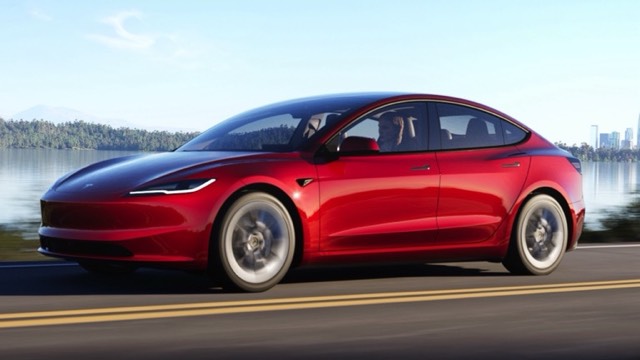
Tesla Model 3
Model page · 2017–2027AC inlet
NACS
DC inlet
NACS
Plugs it does not have but can reach: J1772 with a NACS-to-J1772 adapter; CCS1 with a NACS-to-CCS1 adapter — where the site allows it.
02The station
Any station in the directory, by name, city or state.
Loading the station directory…
Pick a charger and the two verdicts land below: fast charging, AC, or both — with the adapter named when one is needed.
Or hit Surprise me for a random station in the directory.
03The answer
Physical fit only — access, price and availability are the operator's.
DC fast
Waiting for a station
Zap or adapter, at this post
AC · Level 2
Waiting for a station
J1772 or NACS, at this post
Tesla Model 3 across the directory
6,116 of 6,338 stations can charge it
- Fast, as it is
- 117
- Fast, + adapter
- 783
- AC only
- 5,216
- Nowhere
- 222
A NACS post with no listed power counts as AC, in this panel and on the station pages: the feed cannot tell a Supercharger from a destination post when the site never reported its kW, and the connector alone does not settle it.
The four plugs
What fits what, and how much of it exists
The counts are records in this directory, not market totals: a station can list two connectors, and a car can have two inlets. J1772 is AC only, so the fast-charging column is a property of the post rather than of that plug.
| Plug | Carries | Stations | 50 kW or more | Cars that use it |
|---|---|---|---|---|
| J1772 | AC | 5,294 | 193 | Almost every non-Tesla EV, for everyday charging |
| CCS1 | DC | 930 | 740 | Most non-Tesla EVs built since 2018 |
| NACS | AC / DC | 517 | 117 | Teslas and the newer NACS-native models |
| CHAdeMO | DC | 364 | 331 | Older Japanese EVs, the first-generation Leaf most of all |
The adapter layer
Four adapters, and the one plug nothing bridges
An adapter belongs to the car, not the post: it changes the shape of the inlet, not what the station is willing to do. The checker names an adapter only for the pairs below, and it never claims that the site will admit the car.
| Your inlet | The post | What you need | Then |
|---|---|---|---|
| NACS | J1772 | NACS-to-J1772 adapter | AC speed only |
| NACS | CCS1 | NACS-to-CCS1 adapter, or a Magic Dock | Where the site is open to your car |
| J1772 + CCS1 | NACS fast | CCS1-to-NACS adapter | Where the Supercharger site is open to other makes |
| J1772 + CCS1 | NACS slow | NACS-to-J1772 adapter | AC speed only — a destination post is not a fast charger |
| J1772 + CHAdeMO | CCS1 or NACS | Nothing in common use | The car stays on CHAdeMO for fast charging |
A session runs at the lower of the car’s limit and the post’s, so an adapter never makes a slow charger fast. A Magic Dock is an adapter bolted to the post instead of carried in the car, and it has the same rule about which cars a site admits.
The method
How the check is made
Two inlets, not one badge
The vehicle record carries an AC inlet and a DC inlet. A CCS1 car is J1772 plus CCS1; a Tesla is NACS for both; a Leaf is J1772 plus CHAdeMO. The checker reads them separately because a J1772 post cannot fast-charge a CCS1 car.
The post, by speed
A station is split the same way. J1772 is AC, and CCS1, CCS2 and CHAdeMO are DC connectors whatever the post reports. NACS carries both, so it is decided by power: 50 kW or more is fast, and a NACS post that lists no power at all is counted as AC — the feed cannot tell a Supercharger from a destination charger, and no such post here is named as a Supercharger.
The intersection, then the adapter
If the sets meet, it fits. If they do not, the only bridges considered are NACS↔CCS1 and NACS↔J1772 — the two families that are sold. CHAdeMO is left as a no, because a car-side CHAdeMO adapter is not a thing you can buy.
It is the same rule the station pages apply when they list the models that fit a charger, and the same build-time data the directory filters on, so a station page and this checker cannot disagree about a plug. What neither knows is everything that is not a plug: access, price, availability, cable reach and parking rules.
Connector questions, answered
What charger does my car use?
Most non-Tesla electric cars use J1772 for AC charging and CCS1 for fast charging — CCS1 is the J1772 shape with two DC pins added underneath, so one port takes both. Teslas and a growing set of newer models use NACS for both, and older Japanese EVs such as the first-generation Leaf use J1772 for AC and CHAdeMO for fast charging. Pick your model above and the checker reads the two inlets from the vehicle record. In this directory 5,294 stations list J1772 and 930 list CCS1.
Will my car charge at a Tesla Supercharger?
A NACS car plugs in directly at the 117 NACS stations here that deliver 50 kW or more, subject to the site being open to that car. A CCS1 car needs a CCS1-to-NACS adapter, and the site has to be in the program that admits other makes — the plug shape does not answer the access question. The checker says "with an adapter" when the plug is bridged and never claims the site will accept you.
Can I charge a CCS1 car at a NACS station?
At a NACS fast charger, with a CCS1-to-NACS adapter, where the operator admits non-Tesla cars. At a NACS destination post — under 50 kW — a CCS1 car needs a NACS-to-J1772 adapter and charges at AC speed. Neither adapter raises the rate: the session runs at the lower of the car's limit and the post's.
Does a J1772 car DC fast charge?
No. J1772 is an AC connector. The 193 stations here that list J1772 and report 50 kW or more hand that power out through a CCS1 or NACS connector on the same post, not through the J1772 plug. If your car has only J1772, it fast-charges nowhere.
Do I need an adapter to charge my EV?
Only when the plug does not match. NACS↔CCS1 adapters cover fast charging and NACS↔J1772 covers AC; those are the only two families this checker will name. CHAdeMO is the exception that has no car-side adapter in common use, so a CHAdeMO car stays on CHAdeMO. An adapter is car-side and physical: it does not grant access, raise the charging rate or make a slow post fast.
Why does the checker show the wrong connector for my 2025 car?
Because several makers switched from CCS1 to NACS for their 2025 US model years, and the catalogue's connector comes from an older trim. The record is flagged when that is possible, and the checker repeats the flag. The inlet on the car — or the window sticker, or the VIN at a dealer — is the only source that settles it.
What does the checker not know?
Fit is physical only. It does not know whether a site is open to your car, what it charges, whether a stall is free, whether the cable reaches your port without blocking another car, or whether the site's parking rules allow you to plug in. The station page carries the price and the hours where the feed has them; the access rules are the operator's, not the plug's.
My car is not in the list. Can I still check it?
Yes. Type the make and model, then use "Not listed?" — the page writes a prompt you can paste into ChatGPT, and reads the reply back into the checker once it names the car's AC and DC inlets. The reply is validated before it is used, a photo or a source link is optional, and the car is checked by exactly the same rules as one from the catalogue of 108 models. A car with no model year, an import or a conversion can be checked this way.
Is the checker free, and does it store my car?
Free, with no account. The car you pick — or paste in — lives in this page's memory and is gone when you leave it: nothing is stored in your browser and nothing is sent anywhere. The station list is one static file, fetched once, and the verdicts are computed in the browser.